

Hi, I'm Kexin 👋
I'm a Research Affiliate in the HCI Engineering Group at , advised by Prof. Stefanie Mueller. My research interests are digital fabrication and artificial life. And years ago, I was also a fashion designer.
I'm also interested in turning frontier research into something people can actually get their hands on, which is why I founded Cultigen, FunguyLab, and Artineer, and why I edit !nteractives Journal.
Right now a few friends and I are putting together the first Tech Art Hackathon at . I'm always open to collaboration!
Things that grow
-
Biocompiler
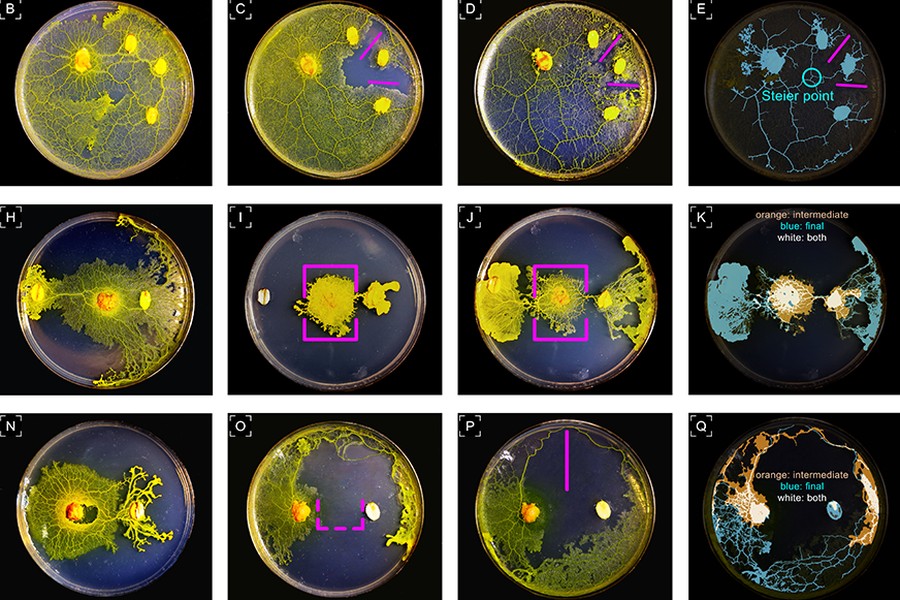
A CNC laser writes an optimization problem into a dish as moving light barriers. Physarum grows the answer; computer vision reads it back.
NeurIPS Creative AI Paper 2026
-
Mycelian Printer
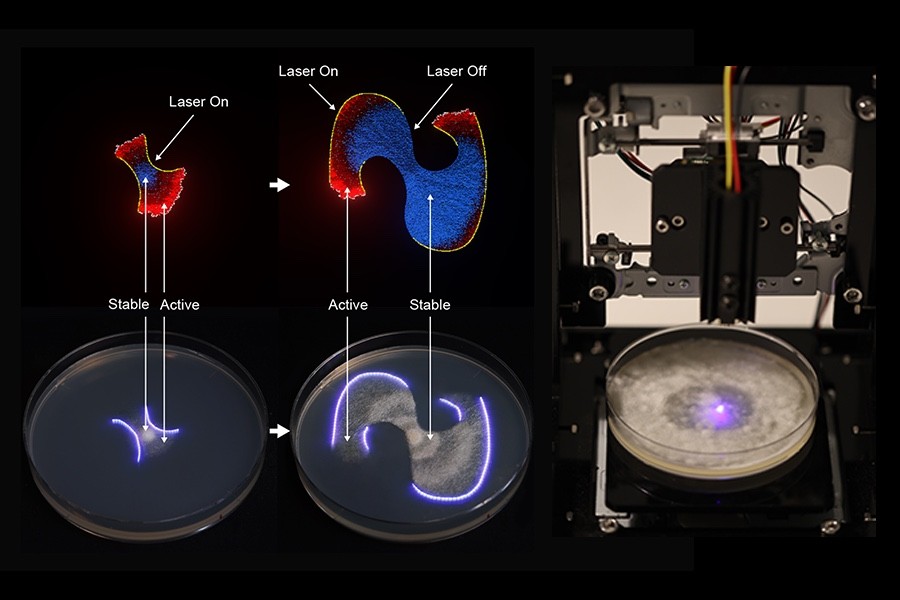
A desktop machine that draws with light on agar. Mucor is photophobic, so it grows away from the lines and into the shape you drew.
-
Participatory Evolution
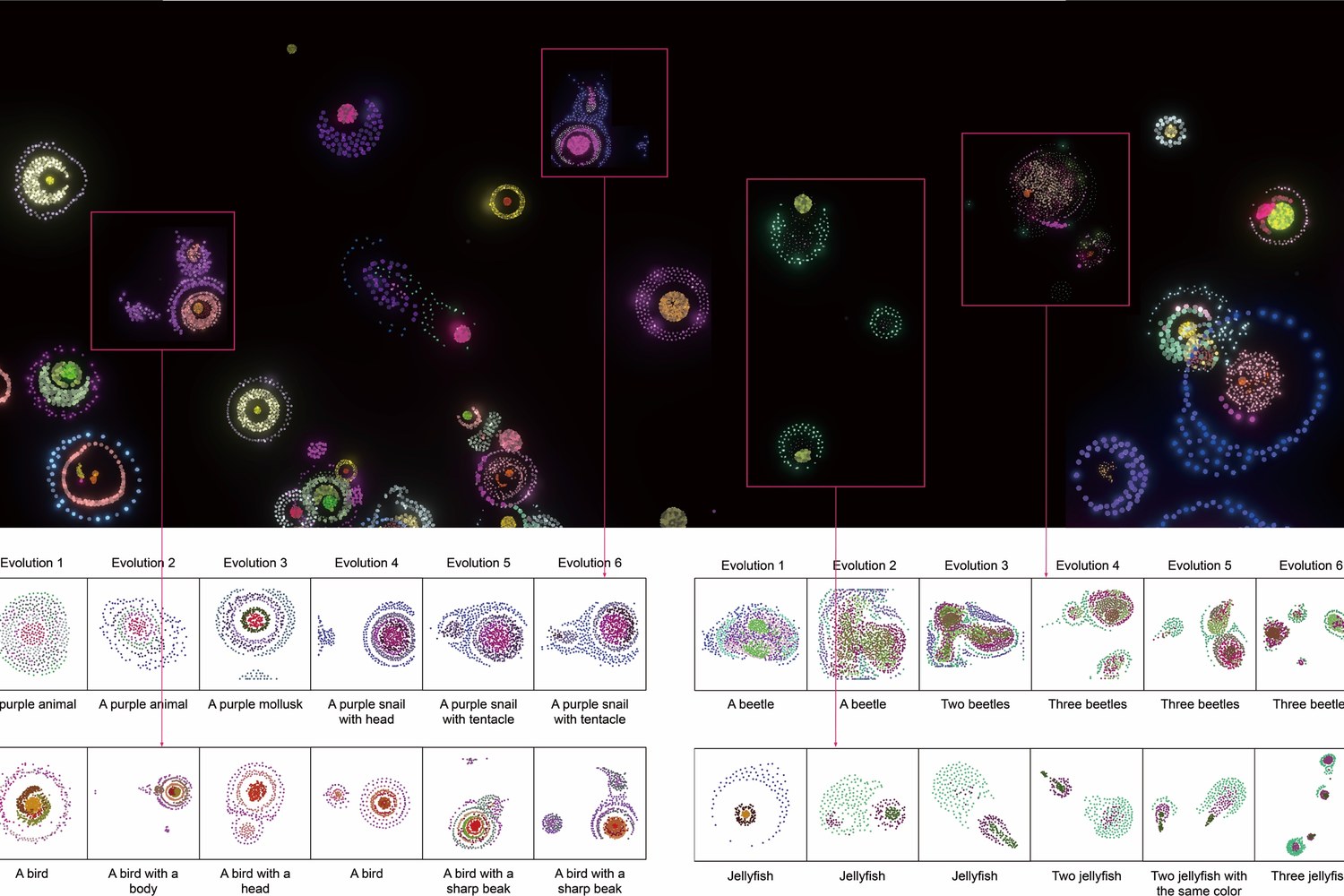
Prompts act on the simulation's parameters, never its output. Audiences describe what they want and the ecosystem evolves toward it.
-
Born, Not Made
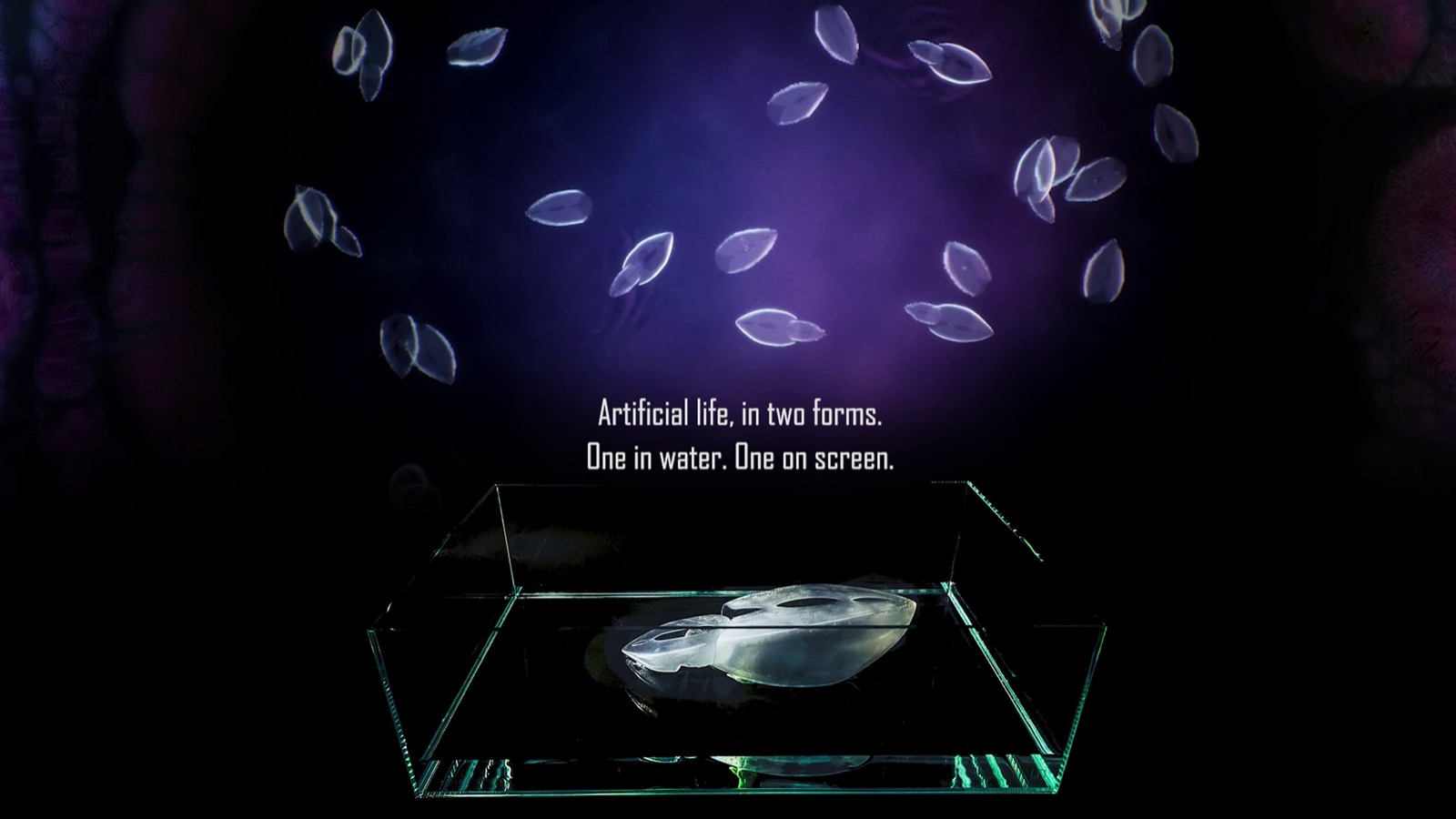
Language-model agents deliberate over whether to bring forth new life. Children inherit what their mothers lived through, not their conclusions.
NeurIPS Creative AI Artwork 2026
-
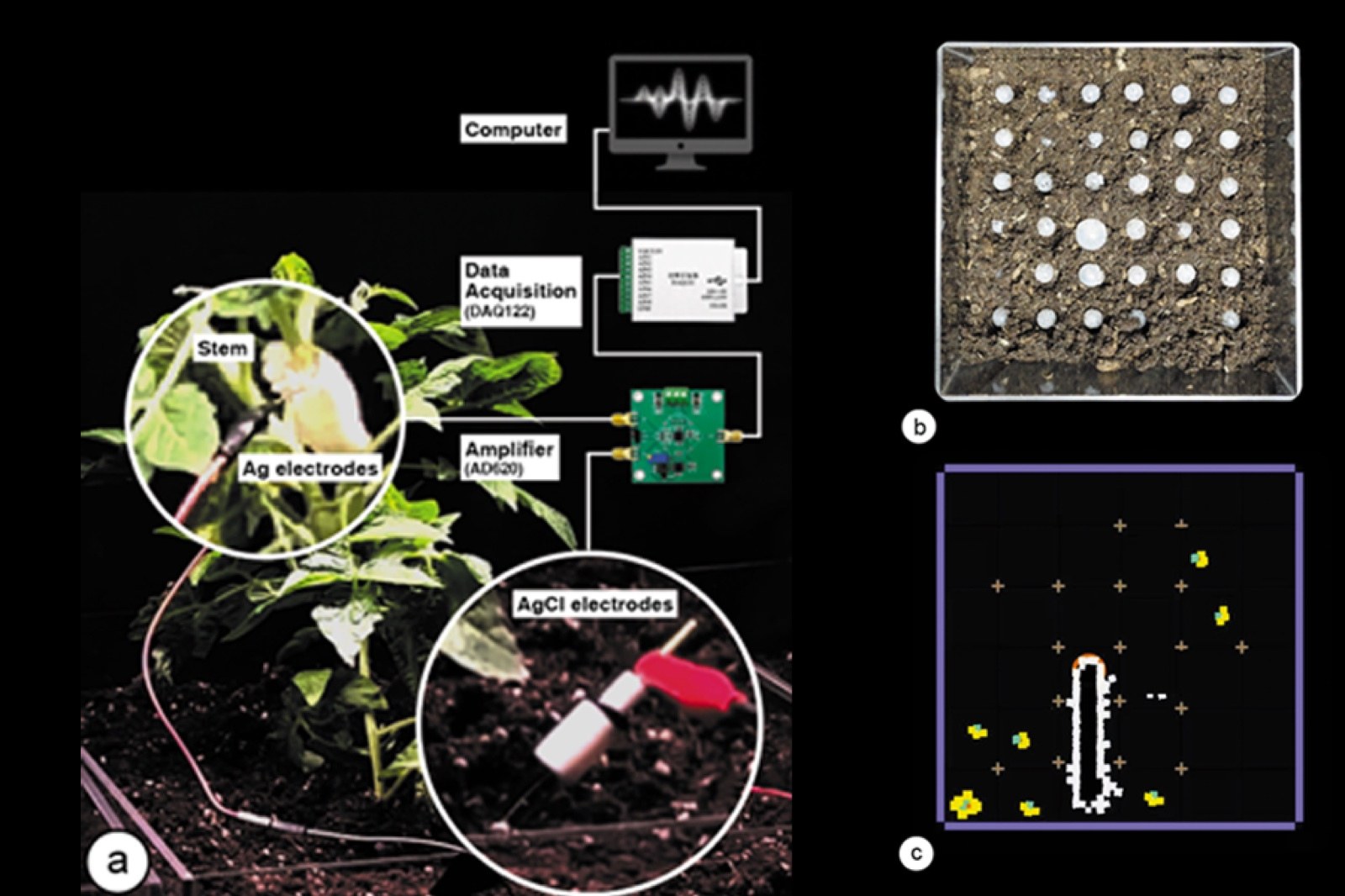
PlantwormSim
Pneumatic actuators in a 6×6 soil grid run cellular-automata rules driven by a living plant's electrical signals, aerating the soil at its roots.
-
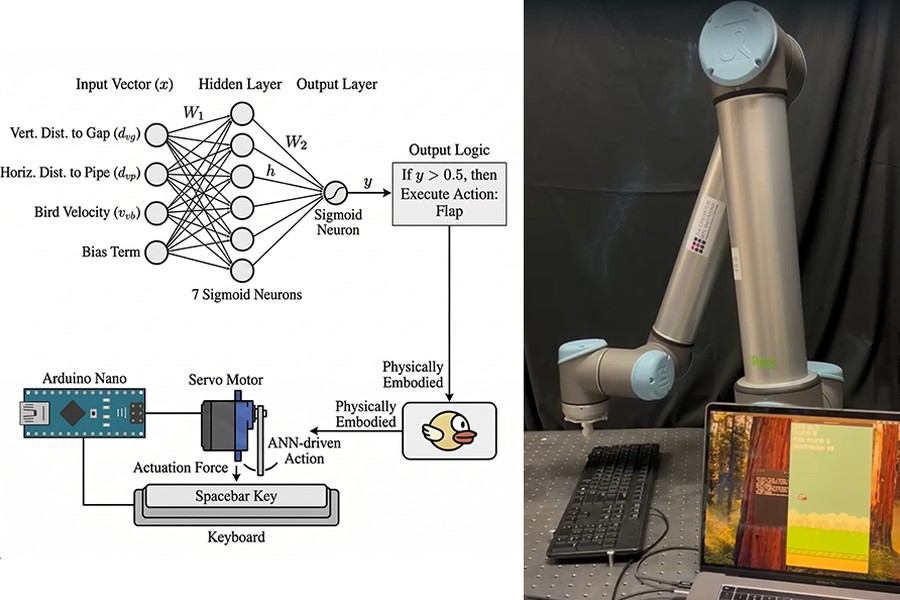
BirdBrain
A genetic algorithm evolves neural networks to play Flappy Bird, then the winning controller moves to a robot arm that presses the space bar.
Things that take shape
-
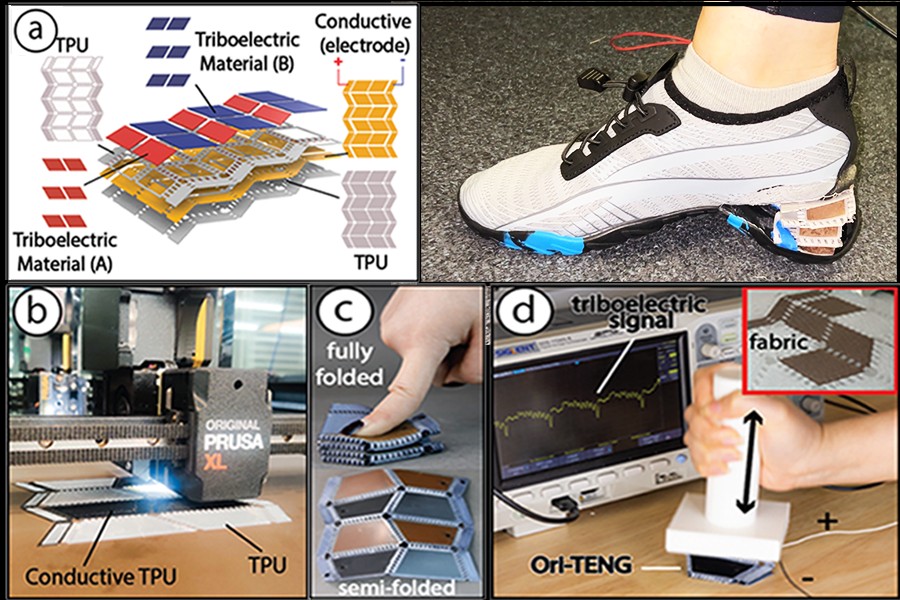
Ori-TENG
Origami tessellations print flat, then fold into triboelectric nanogenerators. Compressing the folds makes charge, which powers their own sensing.
-
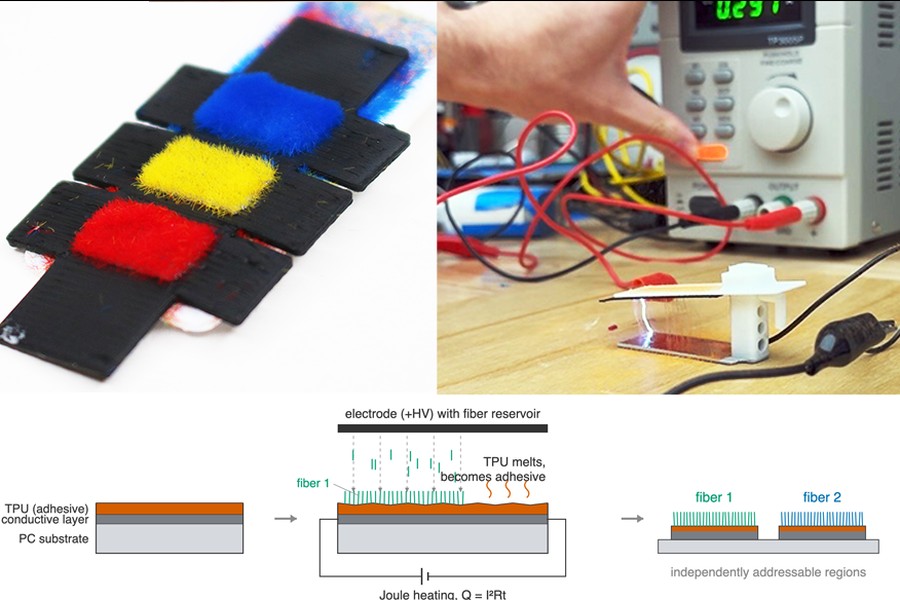
Programmable Electrostatic Flocking (PEF)
The first work to make electrostatic flocking programmable: printed geometry alone decides where fibers land and which way they stand.
SCF 2026, under review
-
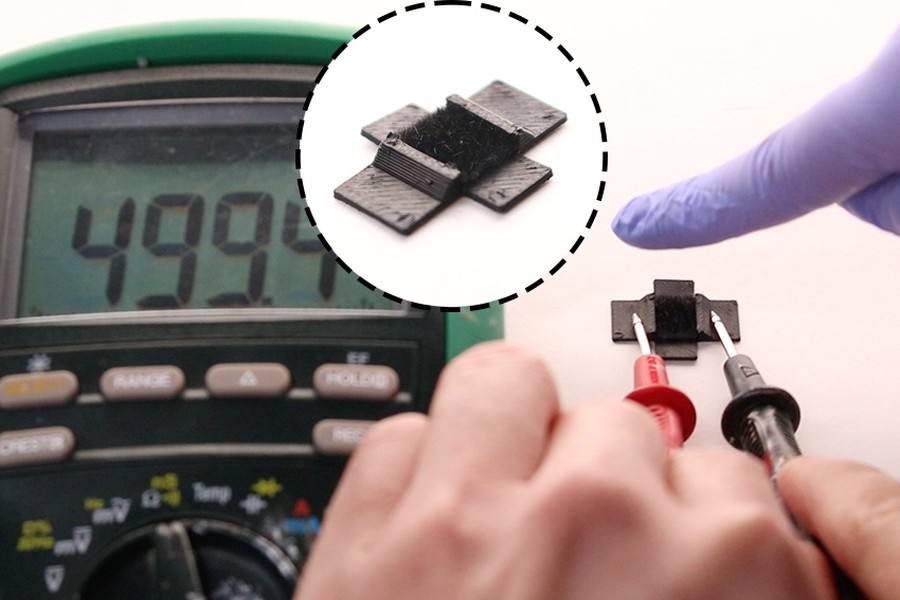
FlocTac
Conductive carbon fibers flocked onto a flexible printed substrate. Pressing or bending the surface shifts the fiber bed's resistance.
-
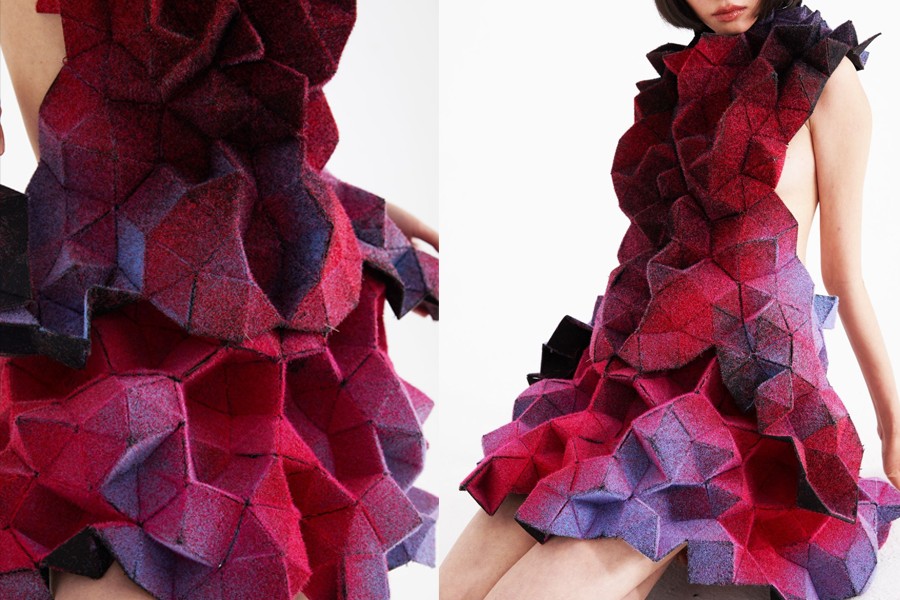
Gravity Tessera
Over 1,000 wool felt squares and triangles, hand-stitched into a flat sheet that folds itself around the body under its own weight.
-
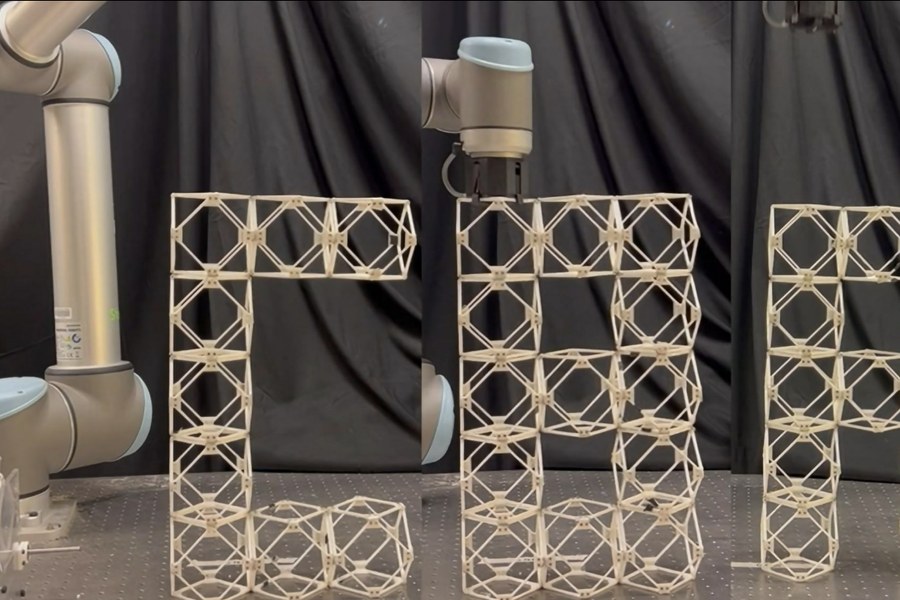
Voxel Assembler
A robot arm assembles voxel blocks straight from live CAD edits, detecting neighbours to avoid collisions and retrying failed picks on its own.
SCF 2026, under review
-
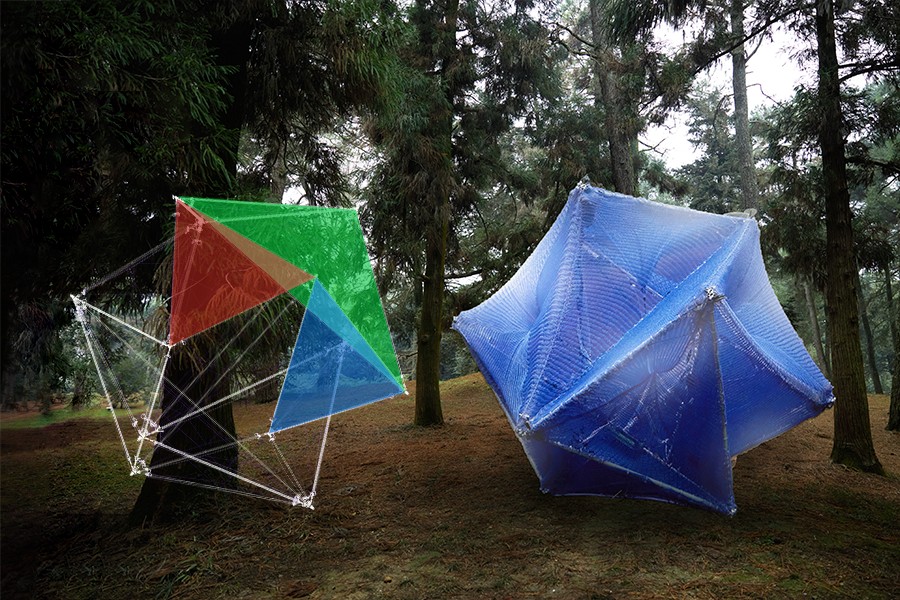
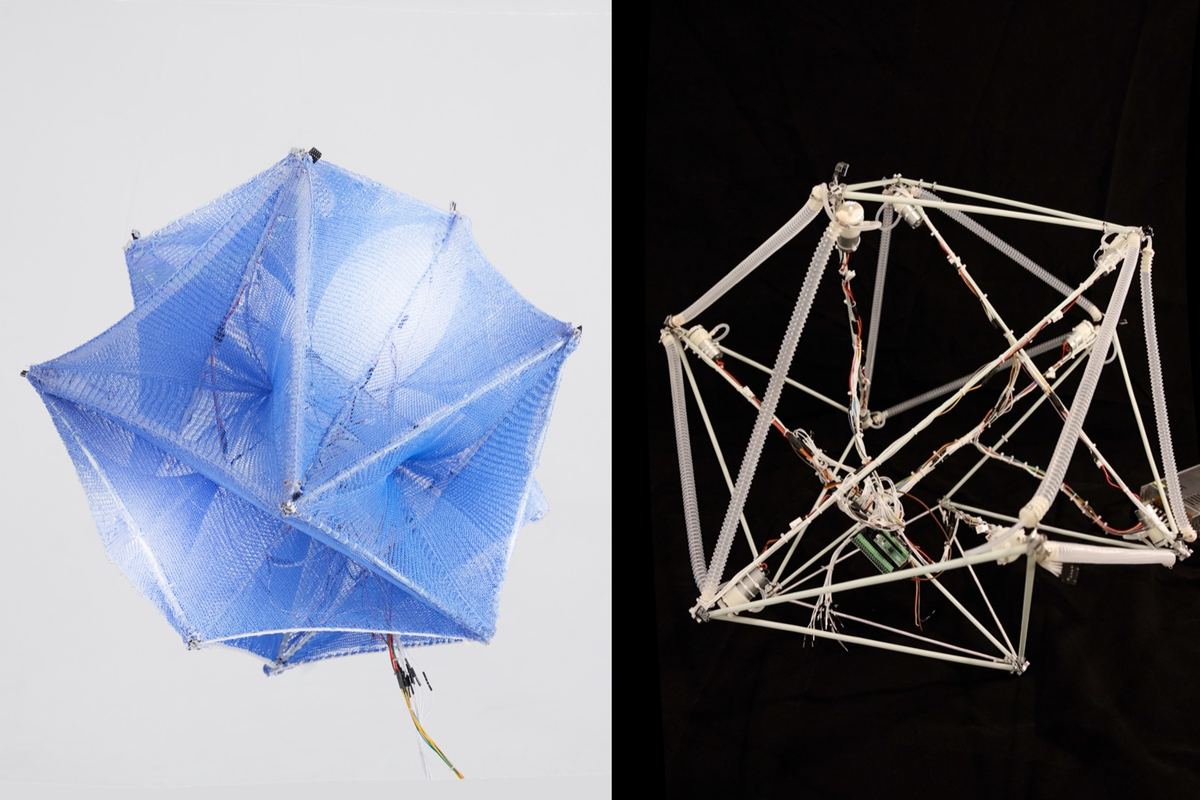
CastOn
A construction robot, digitally knitted and tensioned as a tensegrity structure, driven by pneumatics. Temperature changes its shape and skin density.
-
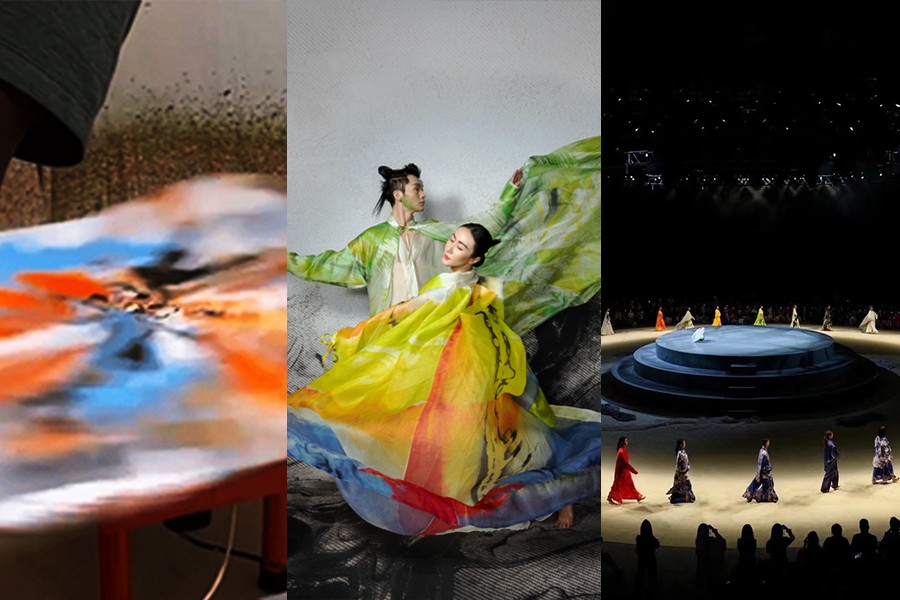
Angel Chen SS22
A pottery wheel rebuilt into a printing machine. Centrifugal force flings dye across fabric, patterning textiles for the Spring 2022 collection.
Things that think
-
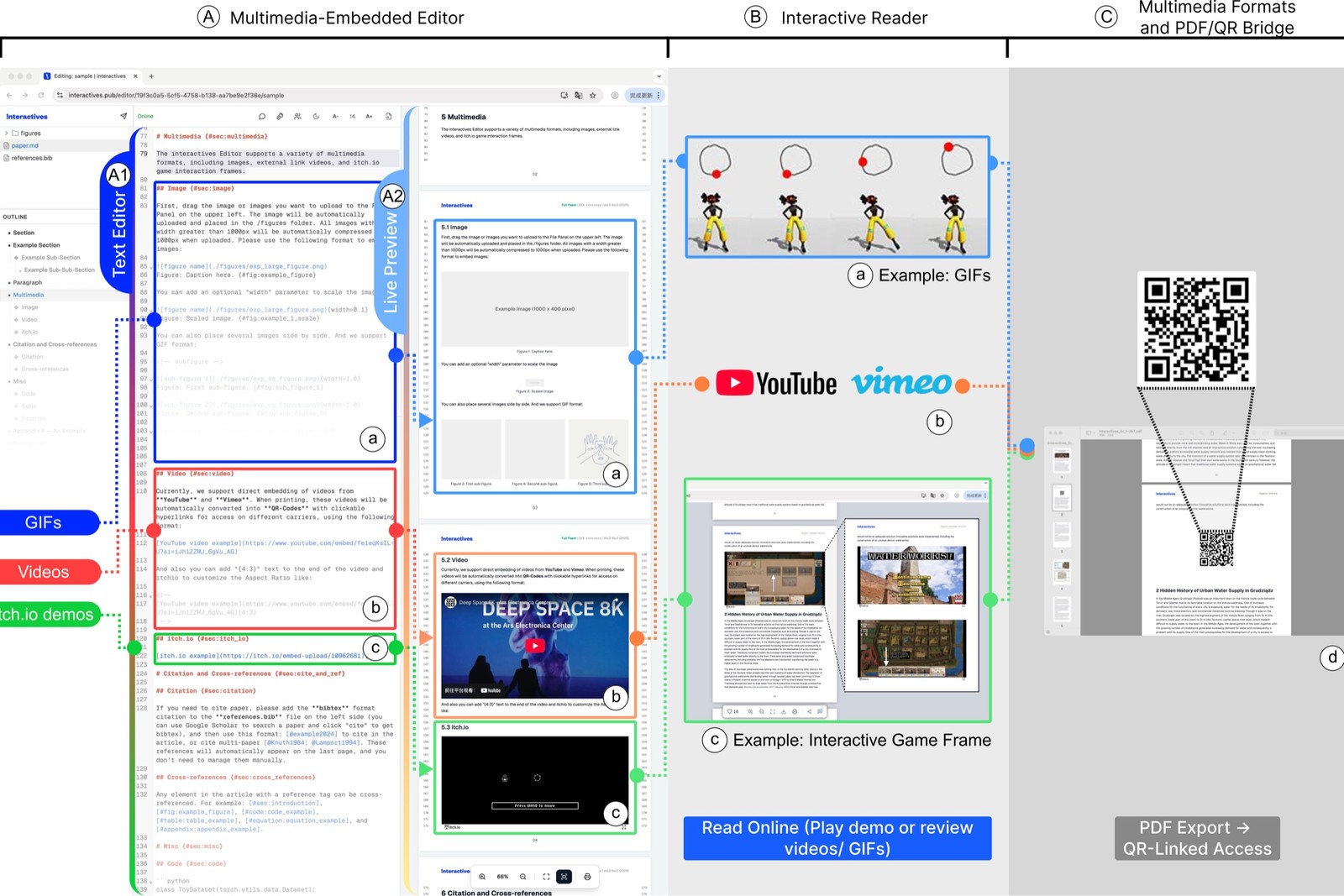
!nteractivesPub
An authoring tool for papers with embedded video, demos, and interactive figures. Two user studies; 8.7× faster than Overleaf.
-
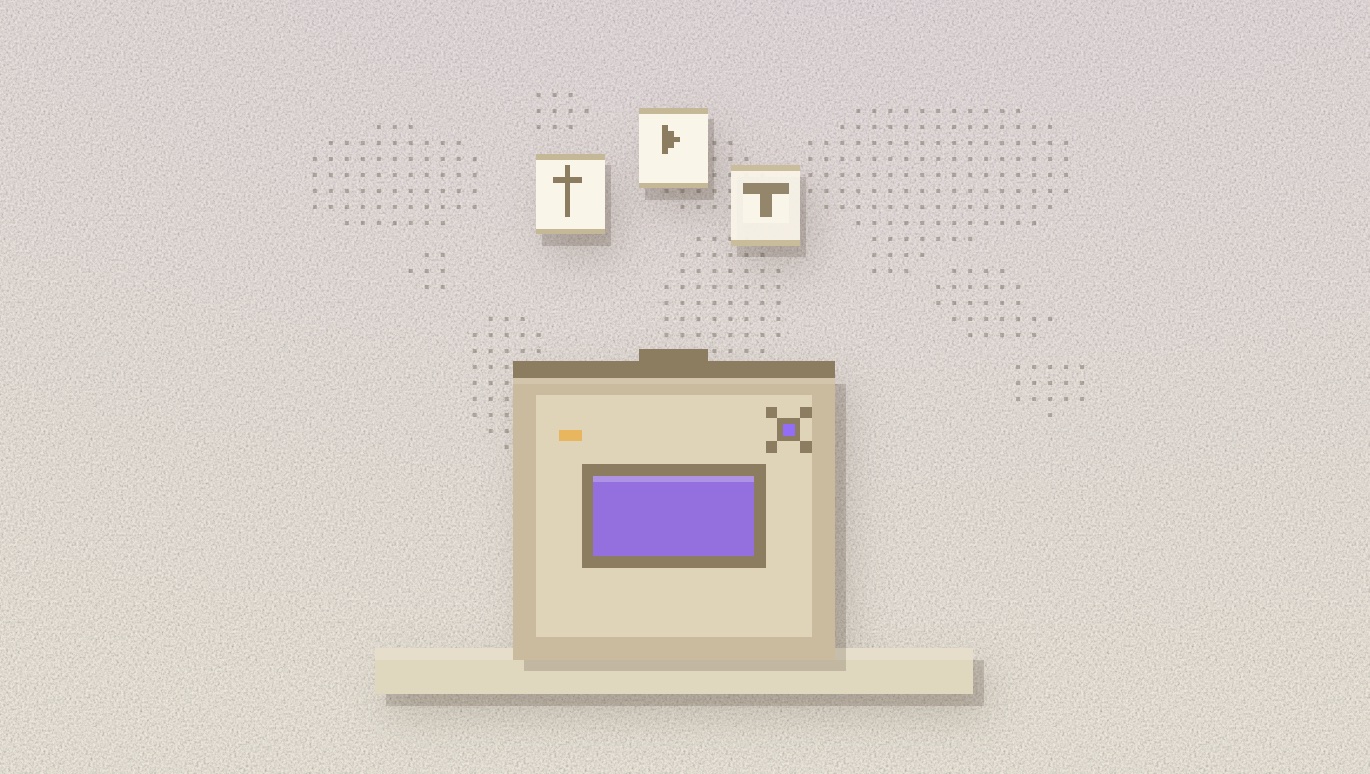
Cultigen
An LLM pipeline that turns one source document into a lesson, a working interactive, and a kit spec, each verified in a headless browser.
-

PatentLens
Freedom-to-Operate search for hardware and pharma. Claims are parsed, embedded, and matched against a product spec, every hit traceable.
-
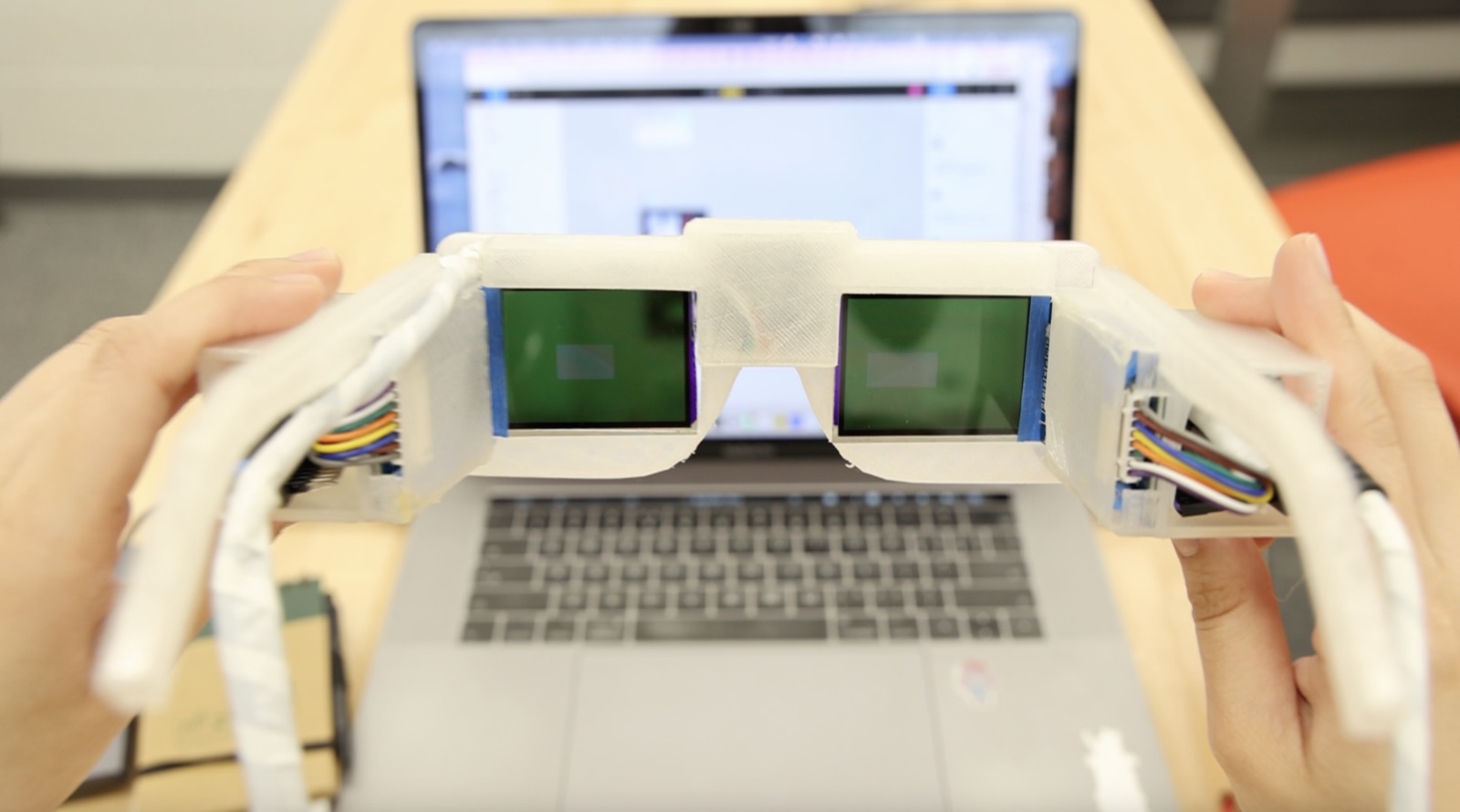
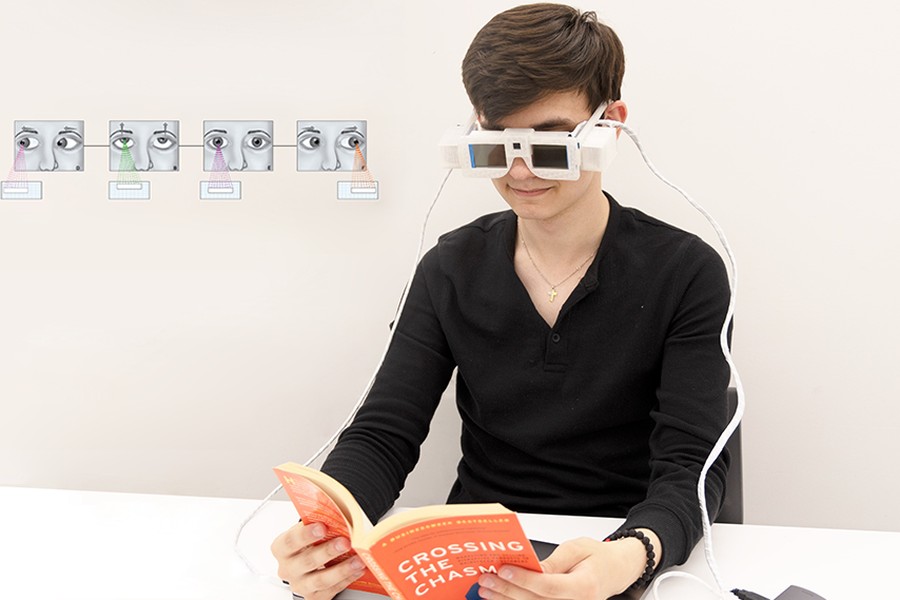
ChromaCalm
AR glasses with segmented electrochromic lenses. Regions darken to cut peripheral distraction while reading.
Papers
-
TriFlock: Selective Electrostatic Flocking via Multi-material 3D Printing
SCF 2026 Under review
-
Interactive Assembly: A Direct 3D CAD-to-Robot Pipeline for Modular Voxel Construction
SCF 2026 Under review
-
Biocompiler: Compiling Spatial Network Optimization Problems into Living Solvers with a Digital Fabrication System
NeurIPS 2026, Creative AI Track, Paper Accepted
-
Born, Not Made: Embodied Artificial Life and Intra-active Agency in Machine Reproduction
NeurIPS 2026, Creative AI Track, Artwork Accepted
-
!nteractivesPub: Redistributing Author and Reader Effort through Interactive Academic Authoring
CHI 2026 Extended Abstracts, Barcelona *Equal contribution
-
Participatory Evolution of Artificial Life Systems via Semantic Feedback
SIGGRAPH Asia 2025 Art Papers, Hong Kong *Equal contribution · Project lead
-
UIST 2025 Adjunct, Busan 🏅 Honorable Mention
-
SIGGRAPH Asia 2024 Art Papers, Tokyo
-
PlantwormSim: Designing Embodied Artificial Life as Ecological Participation Agents
Manuscript
Education
-
2023–2024
Brown University & Rhode Island School of Design
MA in Design Engineering (MADE). Neuroethology and robotics at Brown, industrial design at RISD.
-
Mar–Jun 2024
Massachusetts Institute of Technology
IAP, Statistical Inference in Brain and Cognitive Sciences.
-
2023
Harvard University
Cross-registration, Faculty of Arts and Sciences. Neurophysiology and neural interfaces.
-
2017–2021
China Academy of Art
BA in Fashion and Accessories Design.
Research
-
2023–present
MIT CSAIL
Affiliate Researcher since Jun 2024, Research Assistant from Aug 2023. HCI Engineering Group, advised by Prof. Stefanie Mueller.
-
Nov 2024–Apr 2025
MIT Media Lab
Visiting Artist in the Critical Matter group, with Prof. Behnaz Farahi.
-
Apr–Jul 2023
Tsinghua University
Research Assistant, Pervasive HCI Lab, with Prof. Chun Yu. Beijing.
Experience
-
Jul 2026–present
Cultigen · Founder
An engine that turns research into hands-on courses. FunguyLab is its first brand.
-
Jun 2025–present
!nteractives Journal · Editor
Co-built the authoring platform and journal for interactive research (ISSN 2755-6336).
-
Nov 2024–present
Artineer · Founder
Also HCI Research and Consulting Associate, Jul 2025 to Jan 2026.
-
Nov–Dec 2024
China Academy of Art · Guest Instructor
Hangzhou. Lectures and tutorials on designing for equity.
-
Jul–Oct 2021
Angel Chen Studio · Assistant Fashion Designer
Shanghai. Textiles for the Spring 2022 collection, shown at Shanghai Fashion Week.
Elsewhere
- MIT sitesites.mit.edu/kexinw ↗
- Companyartineerade.com ↗
- Startupcultigen.ai ↗
- Course brandfunguylab.com ↗
- Journalinteractives.pub ↗